
Solidigm™ SSDs Validated on AIC Gen5 DPU-Based JBOF Platform
See how AIC and Solidigm are enabling scalable, high-performance storage solutions for AI, HPC, and disaggregated storage compute environments.
Enabling Next-Gen Storage
Executive summary
In a collaborative effort to push the boundaries of next-generation storage infrastructure Solidigm and AIC collaborated to validate the performance and compatibility of Solidigm™ D7-PS1010 SSDs with AIC’s DPU-based F2026-01-G5 JBOF platform. This interoperability testing marks a significant milestone in enabling scalable, high-performance storage solutions for AI, HPC, and disaggregated storage compute environments. The integration of the NVIDIA BlueField-3 DPU further underscores the platform’s readiness for modern data center workloads.
"This collaboration with AIC reinforces Solidigm’s focus on advancing next-generation storage performance across DPU-based architectures that are foundational to AI and high-performance computing in disaggregated storage environments."
Mike Mamo
Sr Principal Engineer and Sr Director at Solidigm
Platform and device overview
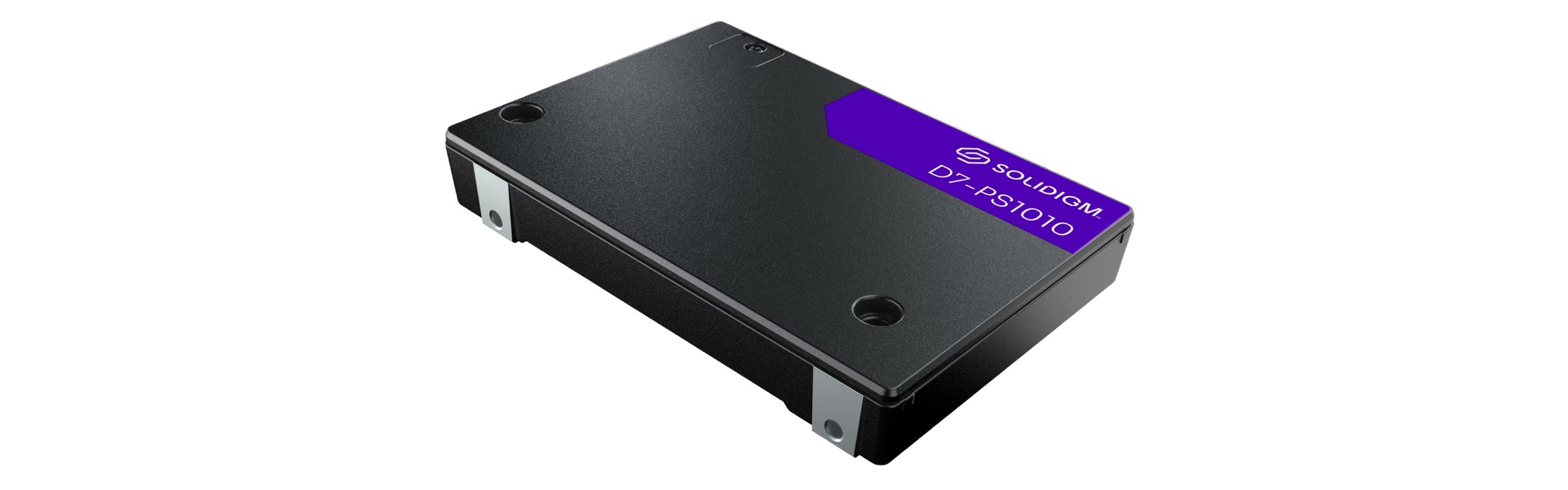
Figure 1. Solidigm D7-PS1010 SSD
Solidigm SSD details
| Attribute | Specification |
| Drive Model | Solidigm D7-PS1010 |
| Interface | PCIe Gen5 |
| Form Factor | U.2 |
| Capacity | 15.36TB |
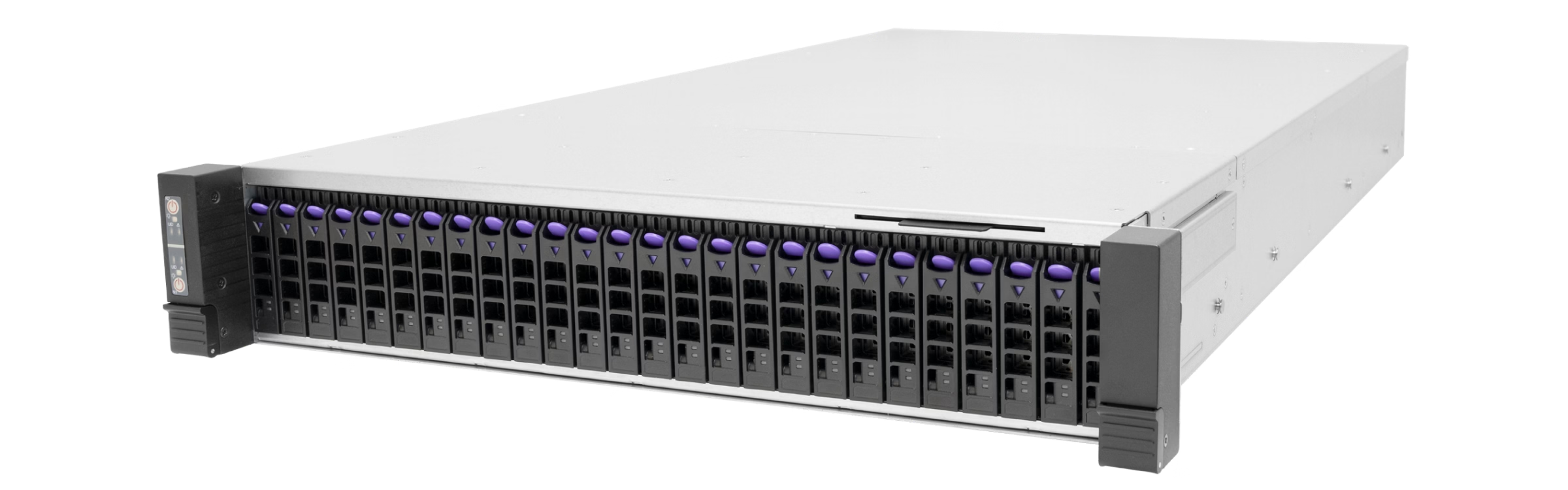
Figure 2. AIC F2026-01-G5
Platform details
| Attribute | Specification |
| Platform Name | AIC F2026-01-G5 |
| Architecture | DPU-based JBOF |
| DPU Model | NVIDIA BlueField-3 |
| PCIe Specification | Gen5 |
| Lane Width per Slot | x2 |
| Total Drive Slots | 26 U.2 slots |
| Target Workloads | AI/ML, HPC, GPU Direct Storage |
Platform layout
Figure 3. AIC F2026 node, top view
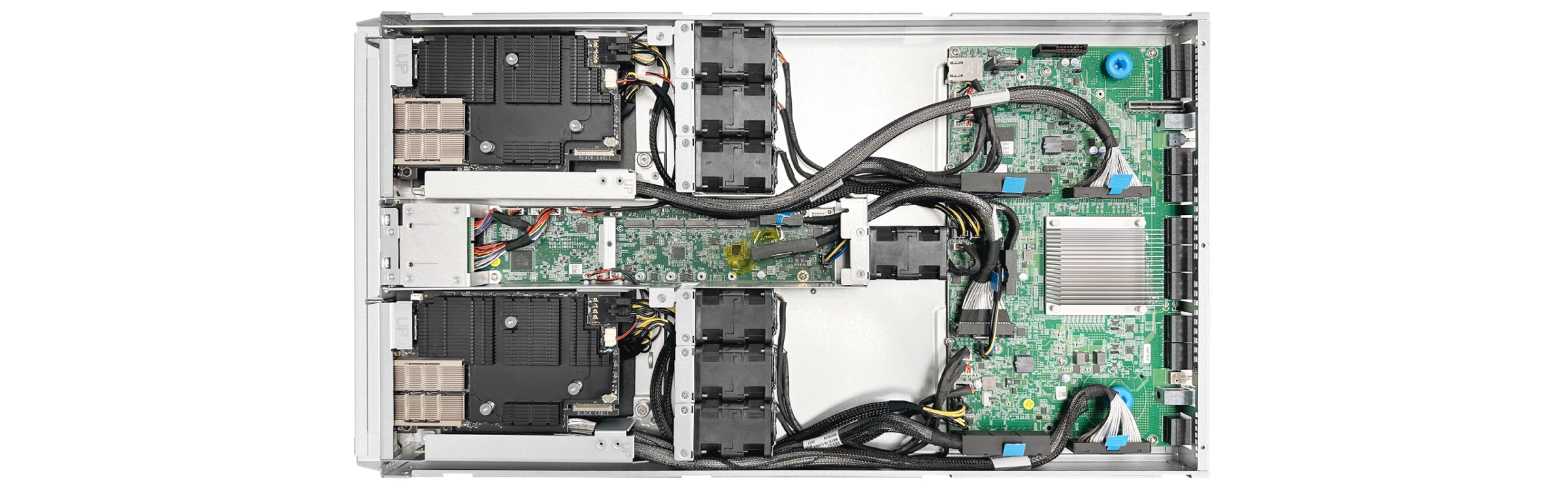
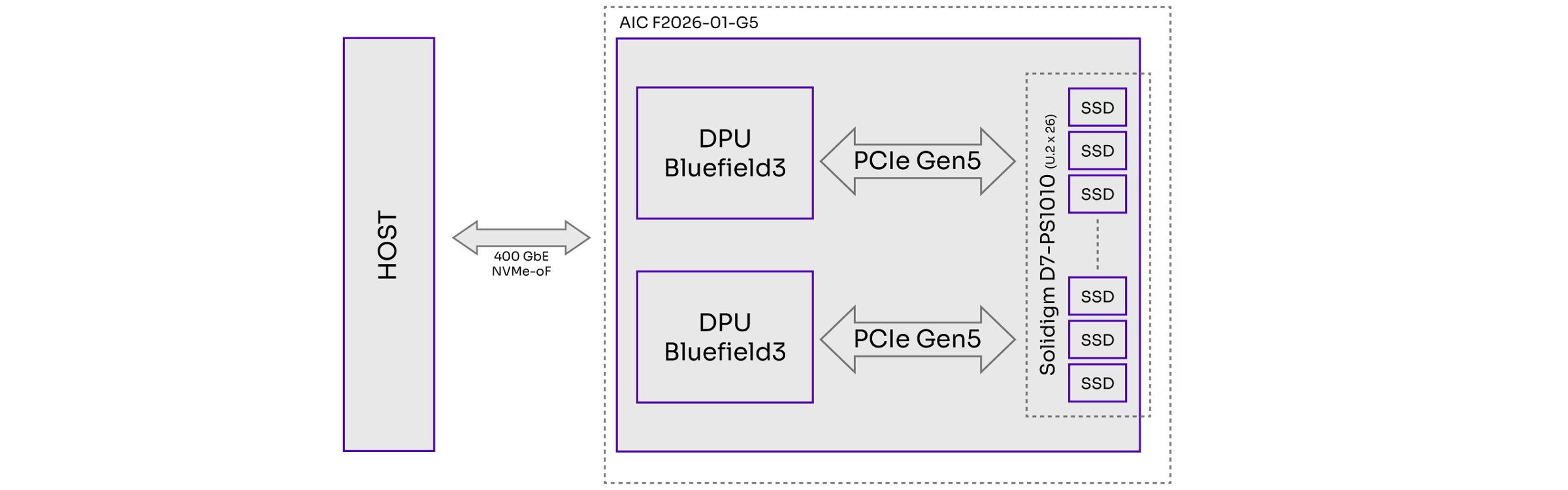
Figure 4. AIC F2026 platform block diagram with host connection
Validation methodology and results
The testing began with an objective to evaluate how Solidigm D7-PS1010 SSDs would perform within AIC’s DPU-based platform. The initial focus was on disaggregated storage validation using the BlueField-3 DPU. SSDs connected via 400 GbE optical links demonstrated reliable data transfer and low-latency access, aligning with the performance requirements of disaggregated GDS storage and similar architectures.
The teams followed this testing by conducting structured evaluations targeting key performance indicators including:
1. Drive enumeration
All 26 U.2 slots successfully enumerated the SSDs at PCIe Gen5 speeds, with consistent behavior observed across multiple power cycles and hotplug scenarios.
2. Link stability
Stress testing involving link resets and retraining confirmed the platform’s ability to maintain stable operation under dynamic conditions.
3. Signal integrity
Signal integrity was assessed using eye diagram analysis, which showed symmetrical, consistent, and wide-open margins at both the SSD endpoints and switch interfaces. These measurements confirmed that the PCIe channels were operating within expected parameters.
4. Thermal behavior
Thermal testing revealed a uniform temperature distribution across the platform, with predictable variations based on slot position and airflow.
5. Workload responsiveness
This data supports the platform’s suitability for sustained workloads in dense configurations.
Conclusion
The joint validation effort between Solidigm and AIC demonstrates the significant progress being made in enabling next‑generation storage architectures built for AI, HPC, and large‑scale data environments. By combining the Solidigm D7‑PS1010 SSDs with AIC’s F2026-01-G5 DPU‑based platform, our testing confirmed mechanical and electrical compatibility as well as readiness of both technologies to support demanding, latency‑sensitive workloads at scale. The seamless enumeration of all drive slots, stable link operation under stress conditions, and predictable thermal behavior highlight the robustness of this combination. These results validate the platform’s ability to deliver sustained performance for disaggregated compute models, GPU‑direct-storage pipelines, and high‑bandwidth data flows central to modern AI ecosystems.
AIC’s knowledge on storage plus Solidigm SSDs provide the endurance, latency, capacity and manageability that AI and enterprise users need for their application and workload.
Kitara Crain is a Senior Eco-System Engineer at Solidigm. In this role, she works closely with ecosystem partners to enable and validate data center storage solutions. With over 10 years of experience in semiconductor enablement and validation, Kitara focuses on collaborating with diverse platform partners to advance next-generation SSD technologies optimized for AI and data‑intensive workloads.
AIC is a leading provider of server and storage solutions, known for its innovation in high-density and high-performance platforms tailored for enterprise, AI, and cloud applications.
Solidigm is a global leader in high-capacity SSD technology, delivering cutting-edge solutions for data-intensive workloads across AI, analytics, and cloud infrastructure.
Other names and brands may be claimed as the property of others.
Solidigm may make changes to specifications and product descriptions at any time, without notice.
Tests document the performance of components on a particular test, in specific systems.
Differences in hardware, software, or configuration will affect actual performance.