Next-Gen Hadoop Storage with BlueField-3 and CSAL
View details from the poster Solidigm presented at NVIDIA GTC 2026 which introduces a solution powered by BlueField-3 and Solidigm CSAL software for superior throughput, reduced CPU overhead, and robust data protection.
Abstract: Traditional Hadoop storage faces challenges in performance and resource efficiency for modern big data workloads. This poster introduces a solution powered by BlueField-3 and Solidigm CSAL software, delivering superior throughput, reduced CPU overhead, and robust data protection via three-way replication, erasure coding (EC), and RAID, ensuring scalable and secure data management.
For the full version of the poster, visit here.
Section 1
Hadoop storage architecture with BlueField-3 and Solidigm CSAL
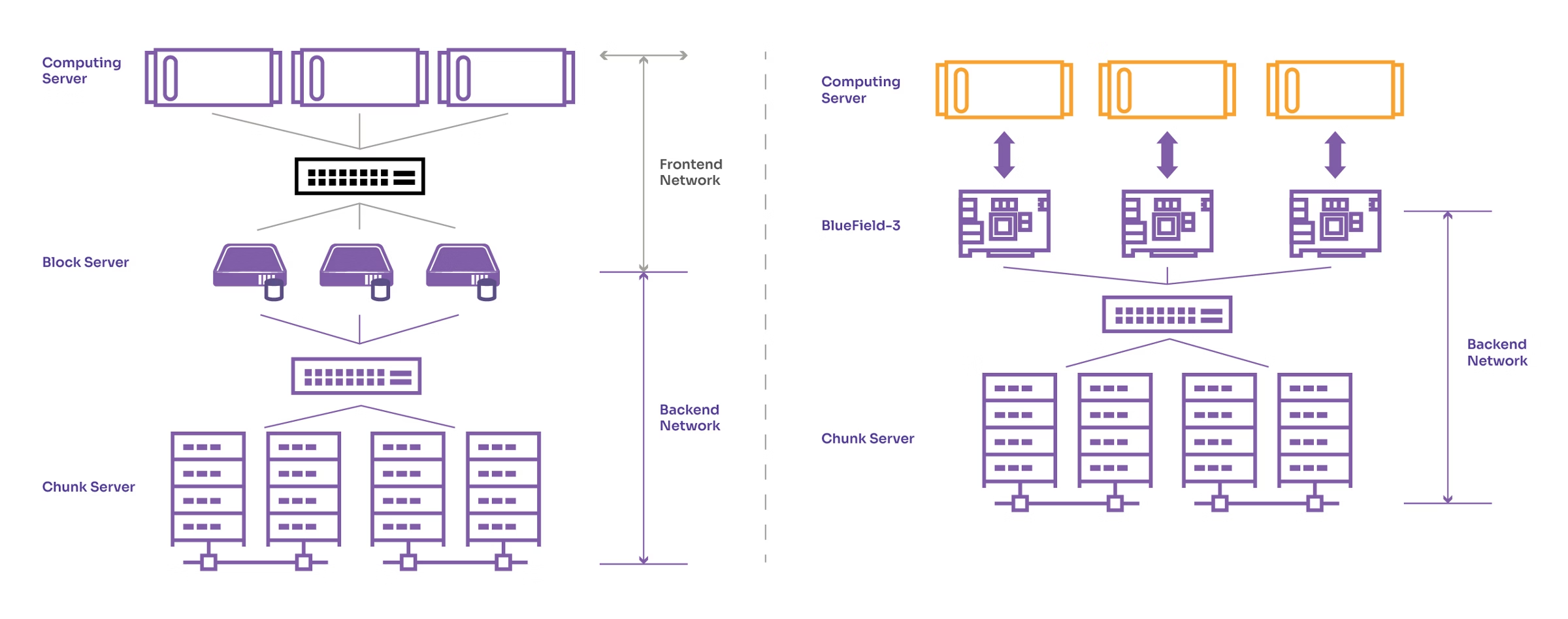
Figure 1. Traditional Hadoop Storage architecture vs. Bluefield-3 + CSAL Hadoop architecture
By adopting the BlueField-3 + CSAL solution, we restructured the three-layer Hadoop storage architecture, bringing the following advantages:
- Utilizing the hardware computing resources in BlueField-3, Solidigm's CSAL software supports various data protection backup mechanisms such as EC, RAID, and multiple copies.
- The original architecture of three layers of servers + two layers of switches that has been compressed into two layers of servers + one layer of switches, significantly reducing the read/write latency of stored data.
- Offloading storage-related computing resources to the BlueField-3 has saved CPU computing resources, allowing the CPU to focus more effectively on Hadoop computations.
Section 2
Traditional Three-Replica
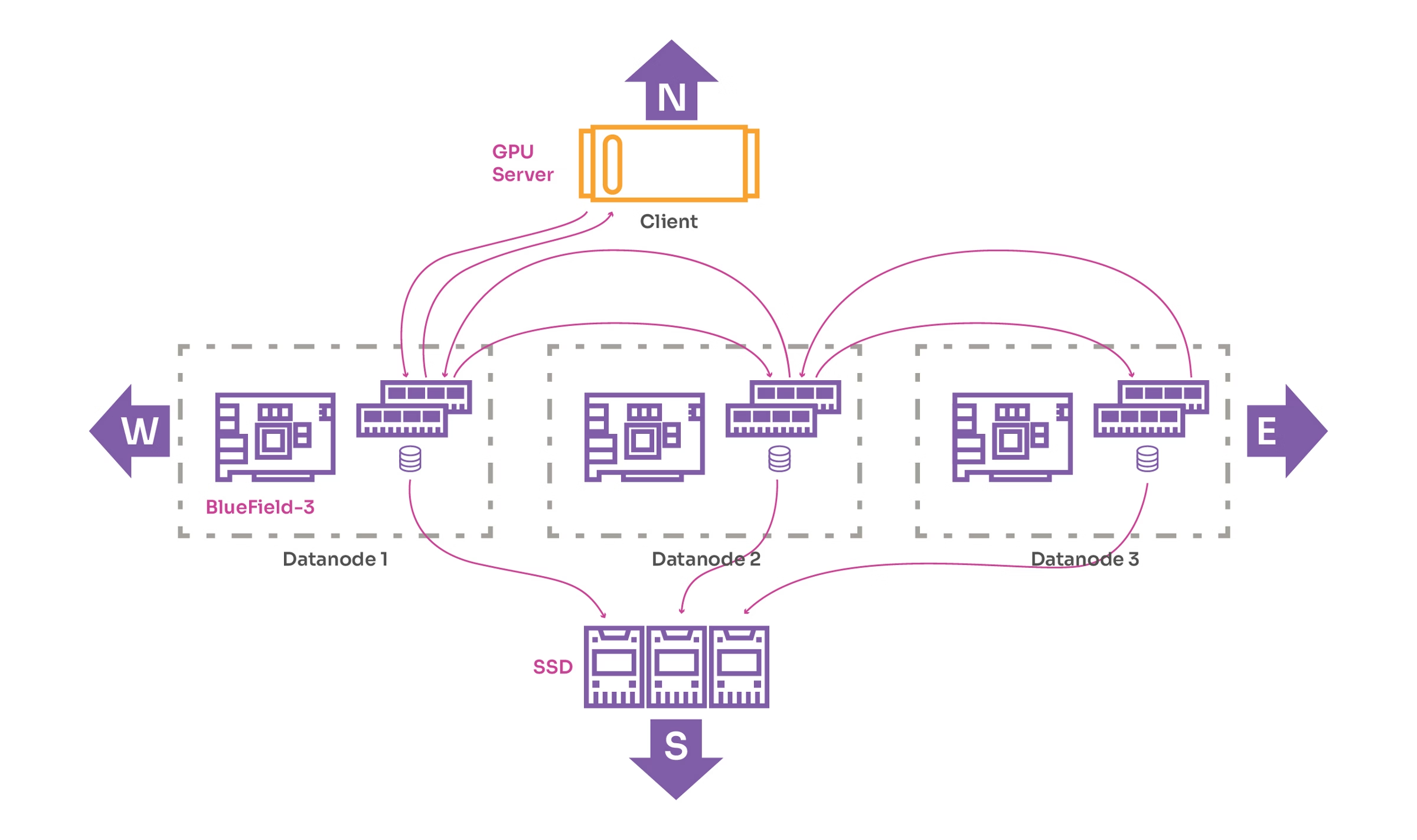
Figure 2. Traditional Three-Replica
High Reliability: Ensures fault tolerance with three copies.
Chained Replication: Data flows sequentially through Datanodes, increasing latency.
ACK Overhead: Multi-step acknowledgment adds complexity and latency.
BlueField-3+ CSAL engaged Active/Backup Architecture
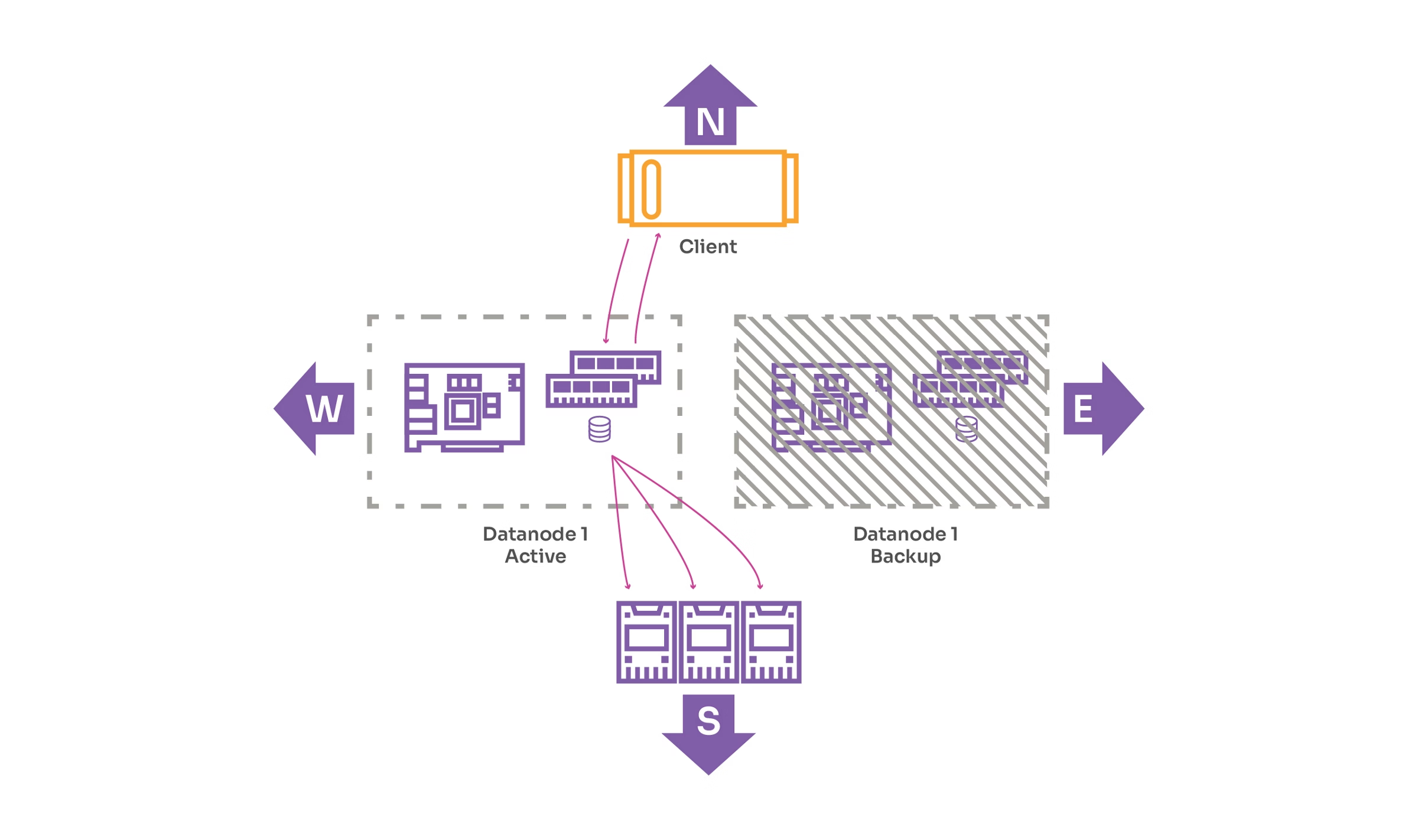
Figure 3. Bluefield-3+CSAL Active/Backup Architecture
Simplified Workflow: Directly replicate data inside one BlueField-3
Improved Performance: No East-West Traffic, reduced replication steps and lower latency.
Optimized for High-Performance Scenarios: Ideal for latency-sensitive workloads.
An additional management plane mechanism is required to enable rapid failover to the backup node in the event of a Datanode failure.
Section 3
Ecosystem
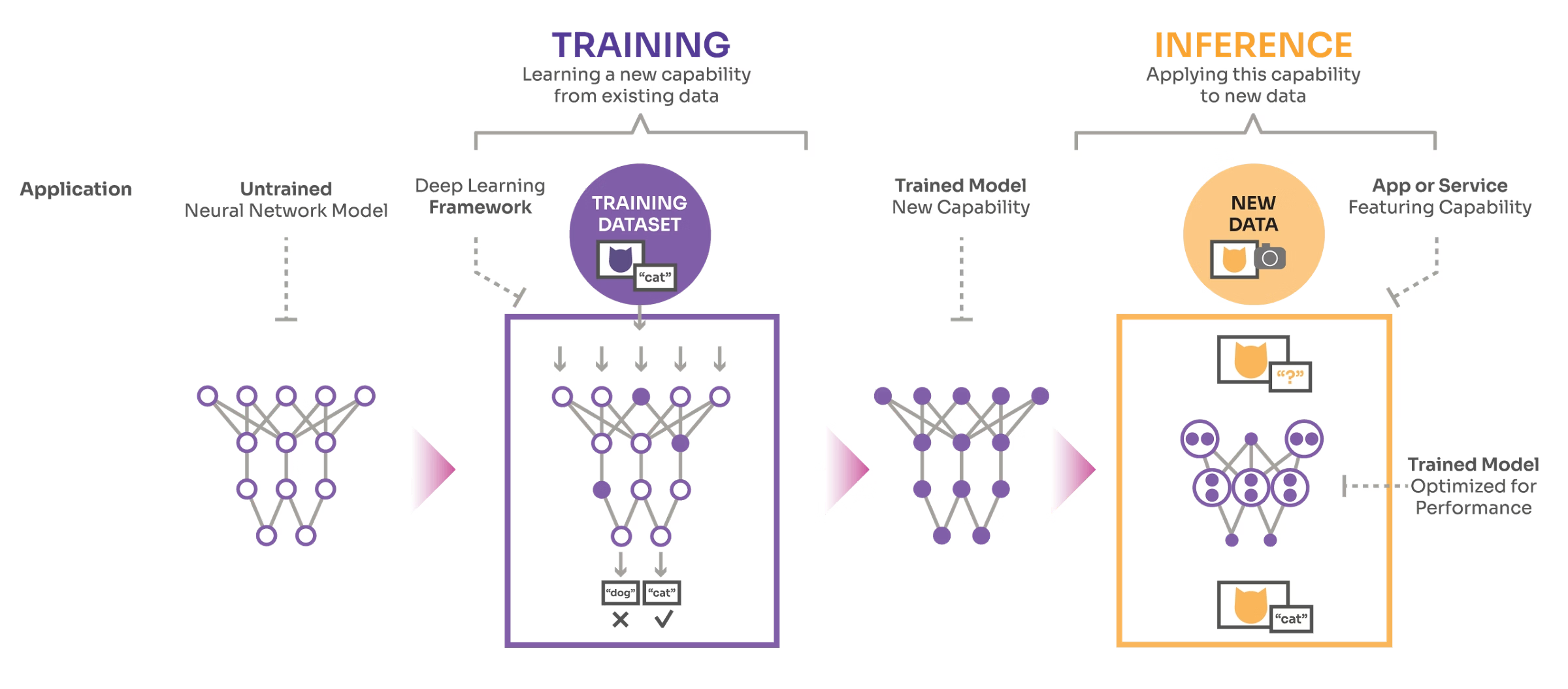



Figure 4. Ecosystem for Training and Inference Models
Section 4
Performance and CPU Comparison
- 3% performance improvement
- 20% CPU resourced used

Figure 5. Throughput and CPU comparison LVM vs BlueField-3 + CSAL
| LVM(MiB/s) | BlueField-3+CSAL (MiB/s) | |
| Sequential 4K write | 2333 | 7697 |
| Random 4K read | 6863 | 18712 |
Table 1. Throughput comparison LVM vs BlueField-3 + CSAL
| LVM(Cores) | BlueField-3+CSAL (Cores) | |
| Sequential 4K write | 6 | 1 |
| Random 4K read | 5 | 1 |
Table 2. CPU usage LVM vs BlueField-3 + CSAL
Section 5
CSAL RAID5F vs MDRAID
Figure 6. CSAL RAID5F vs MDRAID – IOPS comparison
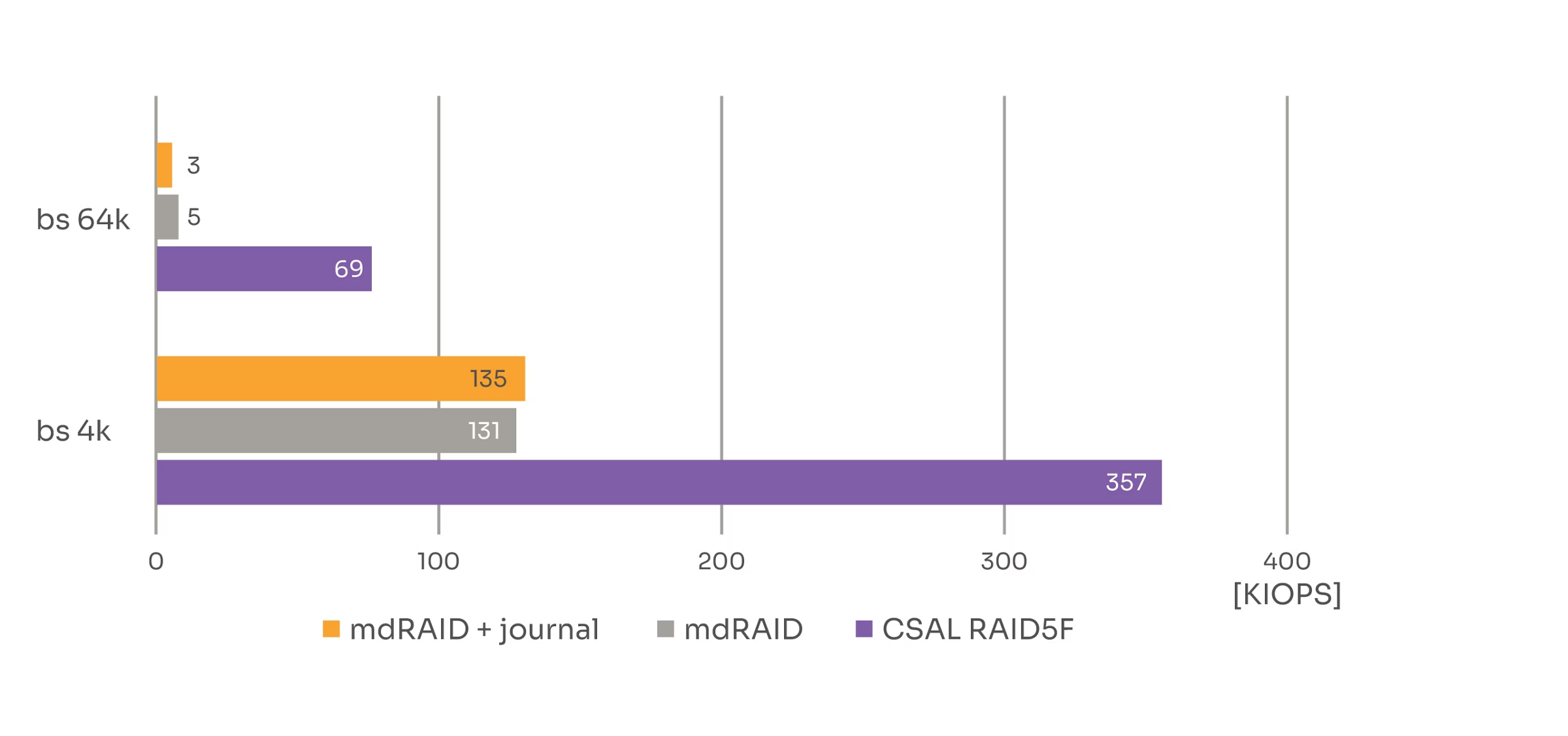
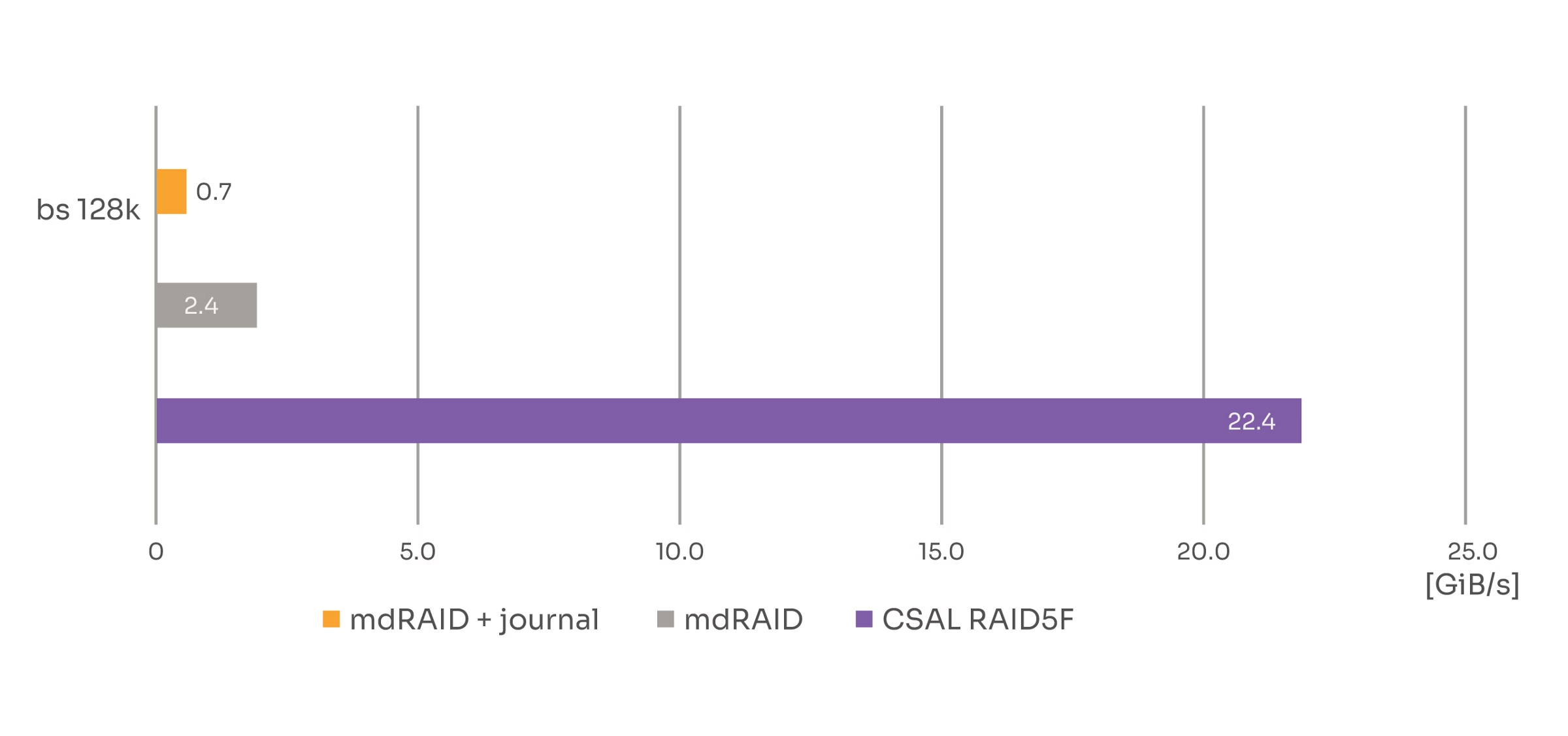
Figure 7. CSAL RAID5F vs MDRAID – Throughput comparison
CSAL offers a feature-rich, robust, QLC-friendly RAID solution — unlocking high-density, high-performance deployments
1. No RMW overhead
2. Built-in write hole protection
3. Scales across multiple cores
4. 4x to 20x better performance vs MDRAID with journal
5. Improved SSD endurance
Section 6
TCO analysis
Solution A: BlueField-3 + CSAL vs Solution B: LVM Datanode
Figure 8. Solution A: BlueField-3 + CSAL vs Solution B: LVM Datanode with CAPEX vs TCO
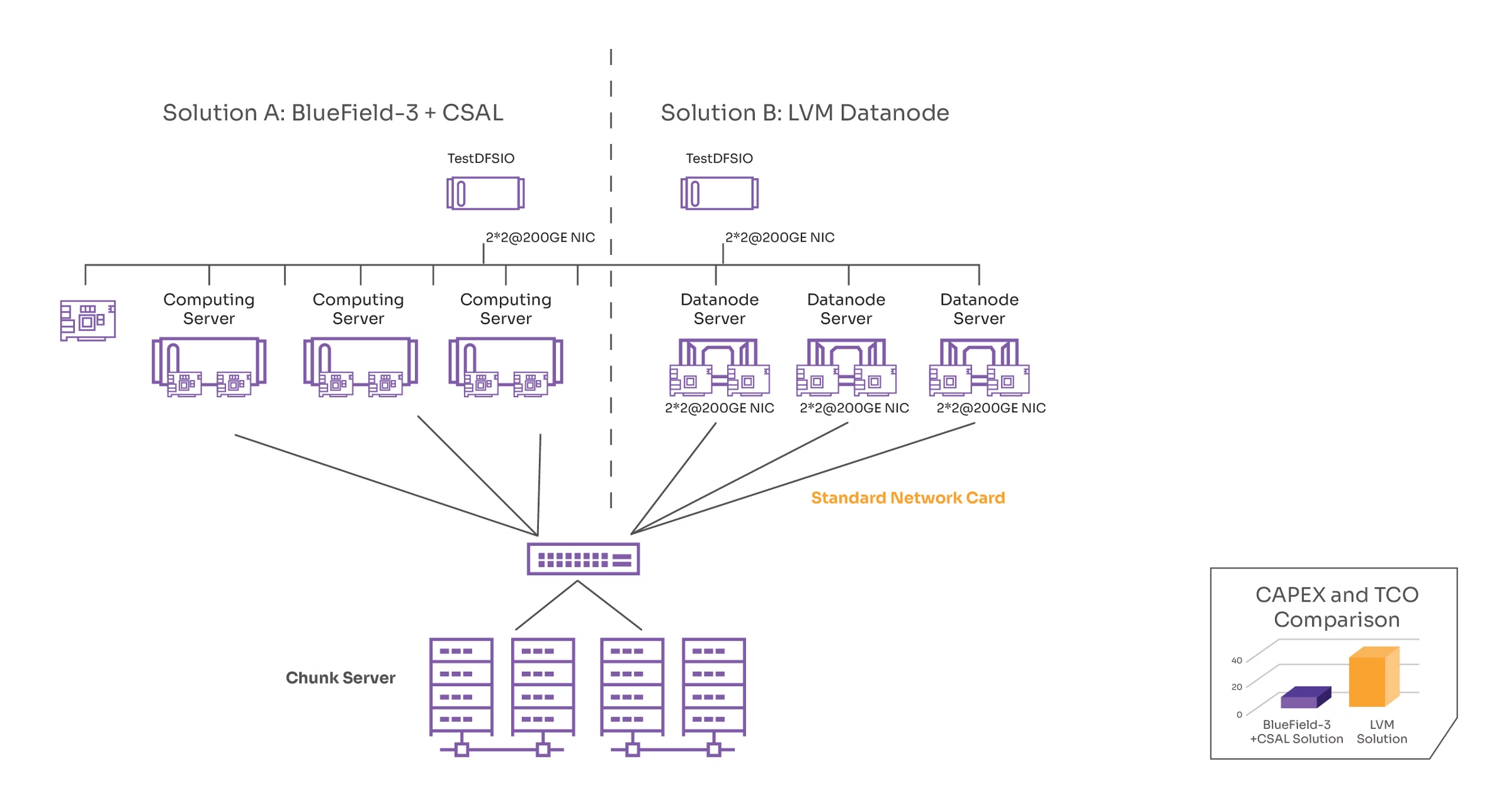
Solution A (BlueField-3 + CSAL) saves data center space and power compared to Solution B by reusing servers on compute nodes and offloading storage-related computations to the BlueField-3.
Taking the three-node example in the figure, Solution A saves over 50% in TCO CAPEX.
Wayne Gao is a Principal Engineer and Solution Storage Architect at Solidigm. He has worked on Solidigm’s Cloud Storage Acceleration Layer (CSAL) from pathfinding to commercial release. Wayne has over 20 years of storage developer experience, has four U.S. patent filings/grants, and is a published EuroSys paper author.
Bo Li serves as a senior storage solutions architect at Solidigm. With over two decades of experience in system design and development across multiple organizations, he specializes in optimizing the performance of networked and storage solutions. In recent years, Bo has concentrated his efforts on advancing the industry-wide adoption of non-volatile storage technologies.
Mariusz Barczak is a Principal Engineer at Solidigm. He has over 13 years of experience finding innovations in storage software and storage solutions. His particular expertise is caching solutions, software defined storage, virtualization, and storage analytics. Mariusz holds numerous patents and is active in the open-source community. He is currently focused on leading the Solidigm team for Cloud Storage Acceleration Layer (CSAL) which delivers mixed media solutions combining Solidigm SLC SSDs with other storage components, such as Solidigm QLC SSDs, to deliver efficient and durable storage.